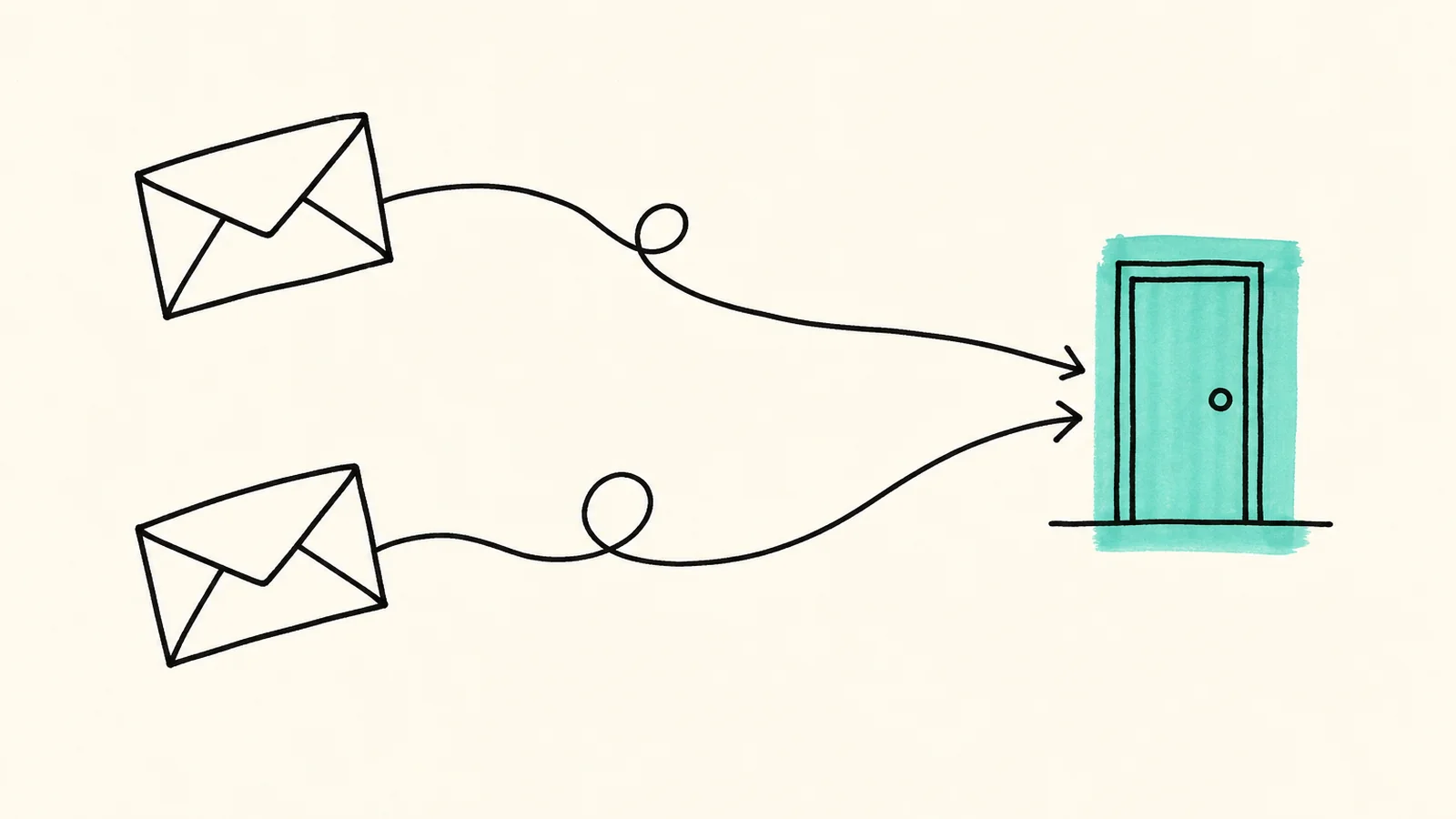
Analysis paralysis is when gathering information about a decision keeps going after it can no longer change the decision. The usual explanations, fear, perfectionism and too many options, describe how it feels rather than how it works. In a 1992 experiment, Amos Tversky and Eldar Shafir found that students tended to take a holiday deal whether they knew they had passed an exam or failed it, yet paid a fee to wait when they did not know yet. A 2021 replication with 890 participants found the same pattern. A 1998 study by Anthony Bastardi and Eldar Shafir added the cost: information people wait for gets used once it arrives, even when it should not matter. The way out is one question per open item: what would I do if this came back good, and what if it came back bad? If both answers match, drop the item. If they differ, get that fact by a date. If you cannot answer, a criterion is missing, not information.
On this page+
Analysis paralysis is when gathering and weighing information about a decision keeps going after it can no longer change the decision. It feels like diligence. Usually, the next fact you are waiting for would leave you choosing the same option either way, and the waiting is the decision being put off.
You know the look of it from the inside. A tab of reviews you have read twice. A spreadsheet with a column you added last week. A sentence that starts "I'll decide once I hear back about", followed by something that keeps not arriving, or arrives and is replaced by the next thing. What follows is one question that sorts everything on that list, the two experiments behind it, and a worked example of the sort on a real decision.
What is analysis paralysis?
Analysis paralysis, also called paralysis by analysis, is a decision stuck in its research phase. You keep collecting and comparing, the collecting never ends in a choice, and each answer seems to raise another question. It is not a diagnosis, and it is not carelessness. It tends to catch people who take their decisions seriously, which is part of why it is hard to see: from the inside it looks like doing the job properly.
It helps to separate it from two neighbors. Indecision is not knowing what you want. Overanalyzing is thinking with no stopping rule, where the criteria get invented as you go. Analysis paralysis is often neither. You may know roughly what you want, and you may even have a leaning. What you have is a list of things to find out first, and the list does not get shorter.
That list is where the time goes, so that is where this piece looks. Most of what is on it, it turns out, could not change the decision whatever it said.
Why does one open question stop the whole decision?
Because not knowing one result makes it hard to see that you would choose the same way whatever the result is. In a 1992 experiment, Amos Tversky and Eldar Shafir asked students to imagine they had just taken a hard exam and been offered a cheap holiday package1. They could buy it, turn it down, or pay a small non-refundable fee to hold the price until the results came out. Students told they had passed tended to buy it, and so did students told they had failed: a reward for one group, a consolation for the other. The students who did not yet know were the ones most likely to pay to wait.
Each informed group had a reason ready. The uninformed group had two reasons, one for each outcome, and could not use either until they knew which applied, so they paid for time. Tversky and Shafir's reading was that under uncertainty people often skip thinking through what they would do in each case, and that their choices line up again once they see what they would prefer under each outcome. That last finding is the method this piece is built on.
The core result has held up. In 2021, Ignazio Ziano, Gilad Feldman and colleagues reran the paying-to-know problem with 890 participants and found the same pattern, including when the same people answered every version2. A second problem from the original paper, about gambles, did not replicate, so read this as strong evidence for decisions shaped like the holiday one rather than as a law of nature.
Ask what causes analysis paralysis and most guides put too many options near the top. The evidence for that is weaker than its reputation. An open question is a better suspect.
Why does waiting for more information feel like progress?
Because looking something up is a task you can finish today, while choosing is a risk you have to take. Research gives you the feeling of moving without the exposure of committing. And waiting seems free, since nothing is being decided.
It is not free. In a 1998 paper, Anthony Bastardi and Eldar Shafir looked at what happens when the information you waited for finally arrives3. Across a series of scenarios, people chose to wait for facts that would not have changed their choice had those facts simply been available from the start. Then, having waited, they used them, and the facts pushed them toward choices they would not otherwise have made. Waiting for something signals that it matters, so by the time it arrives you treat it as if it does.
In sessions we see the front half of this constantly. Ask someone what they are still waiting to find out and the list comes quickly, said with some relief, because the list is the reason the decision is not due yet. Ask what they would do if each item came back the other way, and most items get the same answer twice.
Sort everything you are waiting on with one question: what would I do if this came back good, and what would I do if it came back bad? Ten minutes with a pen turns a list that never shrinks into one with an item or two left on it.
List what you are waiting to find out. Every item, including the ones that feel minor: the review, the friend's opinion, the second quote, the email you are hoping for.
Write two answers for each. What you would do if it came back the way you hope, and what you would do if it did not. Write an action, not a feeling.
Sort by what the two answers show. The table below has the three piles.
Put a date on what is left. Anything that could flip the decision gets a date by which you will have it, or decide without it.
What the two answers show
What it means
What to do
The same choice either way
The item cannot move the decision
Cross it out, even if it is interesting
Different choices
This is real information
Get it by a set date, then decide
You cannot say what you would do
A criterion is missing, not a fact
Settle what matters first; no search will do it
The third pile surprises people most. If you cannot say what you would do with a result, more research will not help, because you have not yet decided what the decision is about. That is a question about what matters to you, and it is one of the other things a stuck decision waits on.
Research that cannot change your choice is not research. It is a way of not choosing yet.
What does the test look like on a real decision?
Here is how it might go. Say you have spent two months deciding whether to go back to school for a master's degree, and four things are on your list to find out first: whether a scholarship comes through, how the two programs compare in the rankings, what a friend who did the degree thinks of it, and whether your manager would agree to a four-day week.
The rankings go first. If the first program came out ahead, you would apply there. If the second came out ahead, you would still apply to the first, because it is the one you can attend without moving. Same answer twice: cross it out.
The friend is next. Whatever they say, you would still want to go, which makes this reassurance rather than information. Cross it out too.
The scholarship splits. With it, you start this year. Without it, you wait a year and save. Two different actions, so this one stays, and it already has a date: the letter is due in March.
The four-day week is the surprise. When you try to write what you would do if your manager said no, nothing comes. That blank is the real finding. You have not decided whether you would leave the job for the degree, and no search can answer that for you, so it goes in the third pile and gets the next hour.
Writing the two lines is easy for the first item and harder by the third, mostly because it is tempting to answer the question you wish you had been asked. This is the move Inwitt AI is built around. In Decision, one of the six thinking modes, the AI thinking partner app asks what you would do with each answer, one item at a time, and writes your answers on the thinking board so the crossed-out items stay crossed out. It does not tell you what to choose. It keeps asking until the circled item is the one left.
What about analysis paralysis at work?
At work, analysis paralysis usually shows up as a decision that keeps getting sent back for one more analysis. The same test works as a meeting question. Before anyone pulls another report, ask what result would make the team do something different. If nobody can name one, the report will not end the discussion, however good it is.
Teams add a reason the list never shrinks. When nobody owns the decision, anyone can ask for one more input, and each request sounds reasonable on its own. Naming who decides, and by when, often does more than another round of data. The owner can still ask for analysis; they just have to say which answer would change their call, and saying it out loud tends to shorten the request.
None of this argues for deciding on thin information. A test that keeps every item that could flip the decision is not against research. It is against research nobody would act on.
What only feels like it helps
Most advice on how to overcome analysis paralysis is not wrong so much as aimed past the list. Four moves feel like progress and leave the list where it was.
Setting a deadline without sorting the list. A deadline ends the waiting by force. If the list still holds three items that could not change the choice, they come along to the deadline, and the last week is spent on them. A deadline works best on the one item that could flip things, like the scholarship letter.
Narrowing the options. Cutting ten options to two is good advice, and most people stuck in analysis paralysis did it weeks ago. The paralysis lives in the open questions about the two that are left.
Polling more people. Every new opinion is another item on the list. Run it through the test before you ask: if they said the opposite of what you expect, would you do anything different?
Trying it for a month instead. A trial can be a real way to get information that would change your mind. Used to avoid the third pile, it brings the same unanswered question back at the end of the month.
Questions people ask about analysis paralysis
Is analysis paralysis a form of anxiety?
It can be driven by anxiety, and feeling mentally paralyzed by a choice is a common way to describe it, but it is not a diagnosis on its own. If the freeze shows up in most of your decisions, or comes with changes in sleep or mood, it is worth raising with a doctor or therapist. When it is one decision, what your decision anxiety is guessing is often a good place to start.
Can ADHD cause analysis paralysis?
Many people with ADHD describe freezing in front of choices and tasks, and difficulty organizing tasks is one of the recognized signs of ADHD. If that sounds familiar, a clinician who knows ADHD is the right person to talk to. The test here is for one decision you can name, not a treatment.
What is an example of analysis paralysis?
Reading reviews of two laptops for three weeks and telling yourself you will choose once the next review comes out, when you would buy the cheaper one whatever it says. Bigger versions have the same shape: a job offer held open while you wait for one more conversation that would not change your answer.
What is the opposite of analysis paralysis?
A rash decision: choosing before you have the one fact that would have changed your mind. The two-answer test cuts both ways. It drops the research that cannot matter and keeps the item that could, and skipping that item is how a passing mood signs off on something lasting.
Is analysis paralysis the same as overthinking?
They overlap. Overthinking is a broad loop of worry that can attach to anything. Analysis paralysis is narrower: one decision, held in its research phase by a list of things to find out. That is why a list-sorting test helps with it, and why it does less for a worry with no decision attached.
The two-answer test takes ten minutes on paper, and it works better when something keeps asking after the easy first answer. That is what a session does: it asks, you answer, and what you decided ends up written down in your own words. If a decision has been sitting in its research phase for weeks, join the Inwitt waitlist and bring it with you.
Footnotes
Amos Tversky and Eldar Shafir, "The disjunction effect in choice under uncertainty", Psychological Science 3(5), 305-309 (1992). Journal record↩
Ignazio Ziano, Man Fai Kong, Hong Joo Kim, Chit Yu Liu, Sze Chai Wong, Bo Ley Cheng and Gilad Feldman, "Replication: Revisiting Tversky and Shafir's (1992) Disjunction Effect with an extension comparing between and within subject designs", Journal of Economic Psychology 83, 102350 (2021). Journal record↩
Anthony Bastardi and Eldar Shafir, "On the pursuit and misuse of useless information", Journal of Personality and Social Psychology 75(1), 19-32 (1998). Journal record↩